
 About us
 Payment & Shipping
 News
 Wholesale
 Contacts
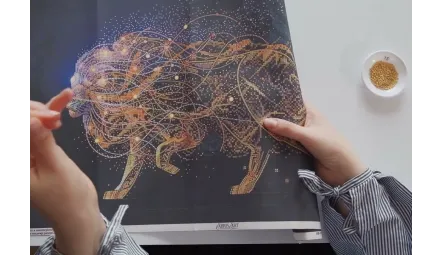
Restoring old embroidery begins with examining the fabric and threads and photographing the damage. Do not wash the piece until its condition and the colourfastness of the dyes have been assessed: water can make the damage worse. If the ground fabric is crumbling, there are tears, or the piece has historical or family value, consult a textile conservator before any intervention.
Restoring old embroidery: where to start
First, define your goal: preserving a family heirloom, securing damaged areas, or recreating the design in a new piece. These are different tasks. Yellowing, faded threads and old repairs do not always need to be removed: they may be part of the embroidery’s history. Trying to make it look new can lead to the loss of original details.
- Prepare a space for examination. Place the embroidery on a clean, flat surface, supporting it across its entire area. Do not lift it by the corners, fringe or embroidered edge.
- Take photographs. Photograph the whole piece and details of the damage. Only photograph the reverse if the piece can be safely turned over with support. Do not pull off a glued lining just to take a photograph.
- Examine the ground fabric and stitches. Note tears, worn areas, fraying edges, broken threads and missing beads. Do not test strength by stretching or pull on loose ends.
- Record what is known. Keep information about the piece’s origin, previous cleaning and repairs. If its age or material composition is unknown, record it as such.
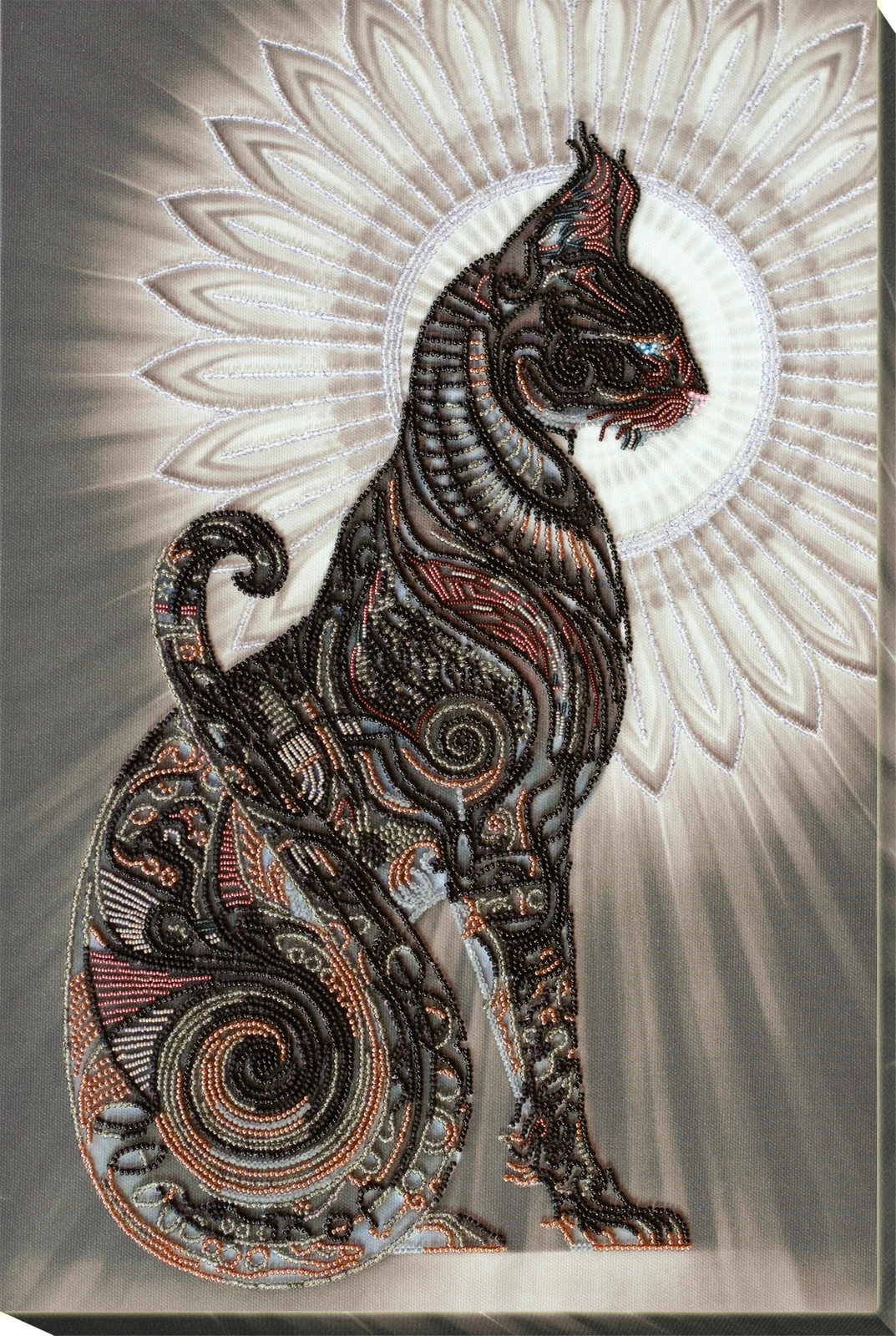
What to do about damage
| Condition of the embroidery | Next step | What to avoid |
|---|---|---|
| Broken threads or missing stitches | Photograph the area. For an old or valuable piece, agree on a method of securing it with a conservator. | Do not pull out thread remnants or unpick neighbouring stitches. |
| A hole, tear or fragile ground fabric | Keep the piece supported across its entire area and consult a textile conservator. | Do not draw the edges together with stitching, glue on patches or stretch the fabric in an embroidery hoop. |
| Stains or yellowing | First, establish the condition of the materials and whether cleaning is possible. | Do not use bleach, household stain removers or homemade mixtures. |
| Faded areas | Check whether the stitches are still intact. Discuss with a specialist whether intervention is needed. | Do not stitch over surviving stitches with new, brightly coloured threads. |
| Detached beads | Collect them in a labelled container and keep them with the information about the piece. | Do not attach the container to the fabric or sew replacement beads onto a weakened ground fabric. |
If you notice mould, do not shake, soak or brush the piece. Agree on further handling with a conservator. Until its condition has been assessed, do not store it together with other textiles.
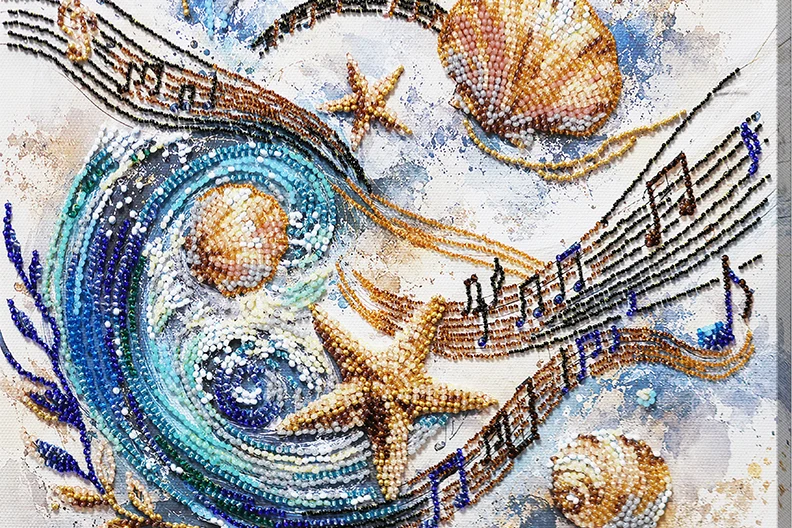
Why washing should not be the first step
With old embroidery, the fabric composition, colourfastness of the dyes and previous interventions are often unknown. Water, rubbing or ironing can worsen weakened areas. Recommendations for a new piece cannot automatically be applied to a family heirloom towel or an old embroidered picture. Even a damp test on a valuable piece is best discussed with a specialist.
A bead-embroidered picture is cleaned using dry methods rather than washed. However, for a fragile old piece, this does not mean it is safe to clean it at home: a brush or vacuum cleaner can catch weakened threads. The method of dust removal is chosen according to the condition of the ground fabric and the way the beads are attached.
Where minor repairs end and conservation begins
Correcting a single stitch on your own modern piece made with known materials is different from restoring old textiles. For modern embroidery, you can first recreate the stitch on a separate scrap: compare the thread’s thickness and colour, stitch direction and tension. If the ground fabric is damaged or threads are breaking, stop sewing.
On an old piece, new needle holes and extra tension can damage the fabric. Even a similar colour does not guarantee that a new thread will blend with faded stitches. Do not invent missing parts of the design: give any surviving chart or old photograph to the conservator to discuss possible solutions.
What to ask a conservator
- Which areas need securing, and which can be left without intervention?
- Is cleaning necessary, and how will its suitability be assessed?
- How can the original threads, old repairs and detached elements be preserved?
- How should the ground fabric be supported, and how should the piece be displayed or stored afterwards?
How to store embroidery before a consultation
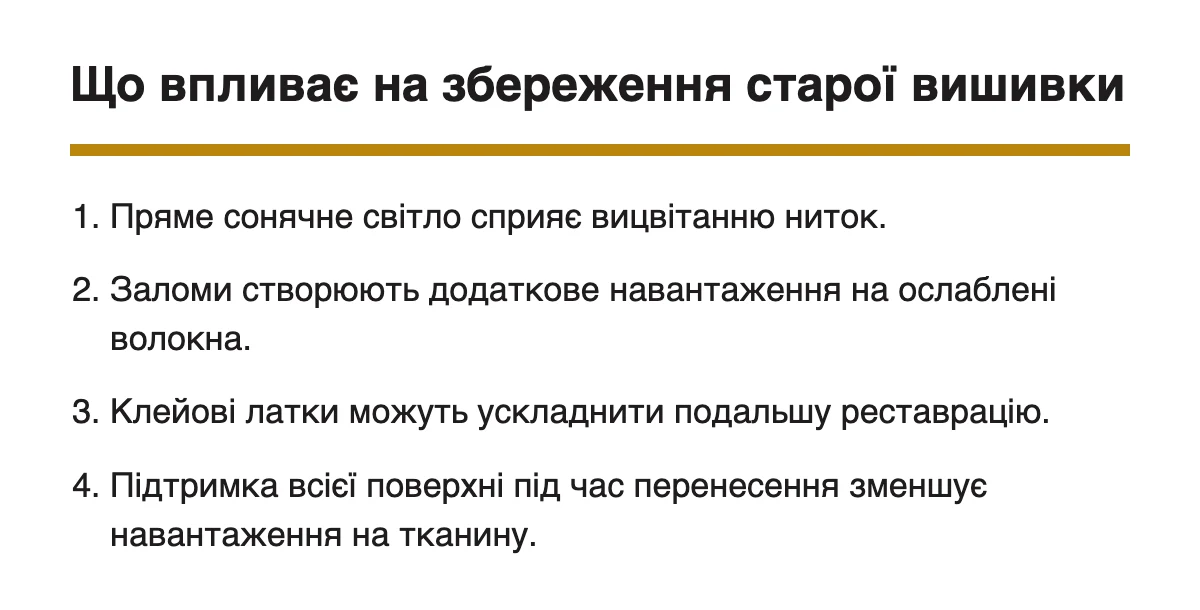
- Keep the piece away from direct sunlight, damp and sources of heat.
- Lay a fragile piece flat, supported across its entire area, without pressure from other objects or new sharp folds.
- Do not remove an old lining or take off fastenings if doing so requires force.
- Keep photographs and records of previous care together: they will help you discuss the piece’s condition with a specialist.
Practising with Abris Art
To practise stitches while leaving your old embroidery for a specialist to examine, choose a separate new project. Abris Art is a Ukrainian manufacturer of craft kits. We offer cross stitch kits for counted cross stitch and with a design printed on the fabric. On new material, you can practise stitch direction and even thread tension.
This practice lets you take a closer look at your own technique. Decide separately whether to intervene in an old piece, taking into account its condition, original materials and value to you.
Frequently asked questions
Can I wash old embroidery before restoring it?
Do not start by washing it. First, the fabric’s strength, the condition of the threads and the colourfastness of the dyes need to be assessed. Recommendations for new cross stitch cannot automatically be applied to an old piece made with unknown materials.
Should I stitch in missing sections myself?
For an old or valuable piece, first photograph the damage and consult a textile conservator. New thread and additional needle holes can damage the weakened ground fabric, while freely recreating the design can alter the piece’s original appearance.
What should I prepare for a consultation with a conservator?
Take overall photographs of the front and reverse, as well as separate close-ups of the damage. Record the known history of the piece, previous repairs and cleaning methods. If the materials or age are unknown, mark them as unknown without guessing.